


This article critically examines a widely circulated misconception regarding Allama Iqbal’s poem "Sulaimā" from Bāng-e-Darā, allegedly written for Atiya Fayzee during his stay in Heidelberg, Germany. Drawing on Iqbal’s own handwritten manuscript and tracing the origins of the confusion to misread or misremembered claims by scholars such as Akbar Haideri and Gyan Chand Jain, the article argues that there is no concrete evidence that Iqbal ever titled the poem “Atiya” or explicitly dedicated it to her. By carefully revisiting primary sources, including Iqbal’s personal notebook housed at Javed Manzil and Sabir Kalorvi’s critical article, the article reveals the speculative and occasionally misleading nature of the interpretations that link the poem to personal relationships. The article also contextualizes Iqbal’s Heidelberg stay, highlighting the poet’s academic, social, and linguistic pursuits, thereby offering a nuanced understanding of the creative atmosphere in which "Sulaimā" was composed. In doing so, the study not only corrects historical inaccuracies but also emphasizes the need for caution when dealing with biographical readings of literary texts.
- Gyan Chand. Ibtidā’ī Kalām-i Iqbāl: Ba tartīb-i Mah o Sāl. Lahore: Iqbal Academy, 2004.
- Iqbal, Muhammad. Mas̱navī Asrār o Rumūz. Lahore: Matbaʿ Karīmī, 1923.
- ____. Bāng-i Darā. Lahore: Iqbal Academy, 1990.
- Kashmiri, Akbar Haideri. Iqbāl: Nādir Ma‘lūmāt. New Delhi: Prince Art, 2006.
- Kalorvi, Ṣabir. “Iqbāl kī Naẓm ‘Salaimā’ ”. In Ṣaḥīfah, January-March 1988. Lahore: Majlis-i Taraqqi-i Adab, 1988
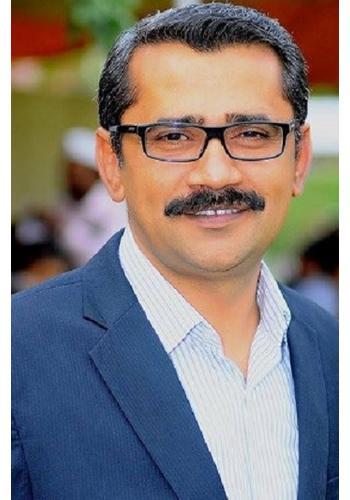
Professor of Urdu
Government College University Lahore, Lahore Pakistan
| Type: |
Article
|
| Volume: |
16
|
| Issue: |
1
|
| Language: |
Urdu
|
| Id: |
68598195837b6
|
| Pages: |
243 - 252
|
| Published: |
|


This work is licensed under a Creative Commons Attribution-NonCommercial-NoDerivatives 4.0 International License.